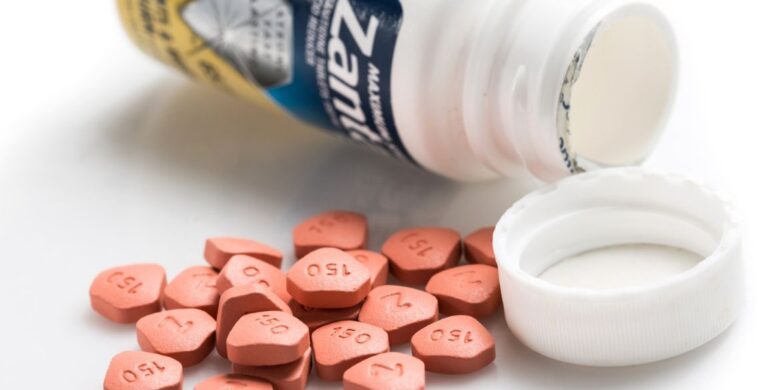
Zantac has been removed from the market because of impurities that were detected in the drug. This medication has been a popular choice for many people treating heartburn and acid reflux. Thousands of users have been exposed to the potentially deadly side effects. Anyone who has taken Zantac or its generic version, ranitidine, should know more about the situation, including the dangers and options that are available. If a person has been diagnosed with cancer after taking Zantac, they need to understand the implications.
The Purpose of Zantac
Zantac or ranitidine is a medication prescribed for people who have digestive problems or issues with their stomach. Doctors have turned to Zantac to treat everything from simple heartburn to upper gastrointestinal bleeding. It is commonly given for patients with gastroesophageal reflux disease and ulcers. These are conditions that develop because the stomach produces too much acid.
Another purpose of ranitidine is to treat stomach issues related to the patient taking anti-inflammatory drugs or non-steroidal medications. The drug also helps to prevent ulcers, which are often stress-related. It is used to calm the stomach after surgical procedures which involved anesthesia.
Zantac is part of a classification of medicines known as H2 blockers, which means it keeps the stomach from producing more acid. While the medication can be given by doctors in prescription form, it’s also available over the counter. It was first approved in 1984 by the US Food and Drug Administration (FDA) for treating stomach diagnoses.
The Risks Associated with Ranitidine
Zantac isn’t unlike other medications in that it does include a list of side effects. Many of them are mild and don’t cause significant discomfort. One of the most common issues is that the patient has an increased risk for developing pneumonia when taking this medication. They may develop chest pains and fever and notice shortness of breath, which could be an indication of pneumonia.
Other common side effects which generally go away in time include headaches, nausea and vomiting, diarrhea or constipation, insomnia and pain in the stomach. A person may notice a decrease in their sex drive and tender and swollen breasts.
More serious side effects require immediate contact with their medical provider:
Yellow or green mucus which is accompanied by a cough
Fast or slow heartbeat
Difficulty seeing or issues with vision
Unexplained weakness
Unusual bruising or bleeding
Loss of appetite
Dark urine
Pale stools
Headaches that include blistering or peeling of the skin or a rash
Yellow eyes or skin
Zantac can interact with other drugs, which leads to other complications. It should never be taken with alcohol.
Zantac is most commonly given in a tablet, but it may be given as effervescent tablets or granules or as a syrup. It is often taken once a day, normally before bed. However, a doctor can prescribe it for up to four times a day.
Should You Take Zantac Long-Term?
While some heartburn and stomach issues are temporary, others seem to continue for the long term. Doctors may prescribe Zantac for longer use because studies showed that it was safe. Along with H2 blockers, proton pump inhibitors are also used to treat the same conditions. However, PPIs were often used in short-term situations while the H2 blockers were prescribed for long-term use.
There are risks in taking Zantac or any medication for longer than a few weeks or months. One of the main concerns among doctors has been that the patient will become deficient in vitamin B12. According to some research, the body fails to absorb the vitamin, so increasing the dosage may not be effective. Long-term use can vary, but the study on vitamin B12 showed that patients had been taking Zantac for at least two years.
Another concern is that Zantac may decrease the levels of magnesium found in the system. When a person doesn’t get enough magnesium, they can suffer from anxiety, muscle cramps, tremors, irregular heart rhythms and seizures.
Rare side effects from Zantac include confusion, inflammation of the pancreas, hepatitis, kidney inflammation, blurry vision, and an abnormal heart rhythm. It can also lead to a lower number of white blood cells.
Why Has Zantac Been Recalled?
If you have heard about the Zantac recall, you may be wondering why. The FDA started an investigation into ranitidine because there was some concern that it contained a high level of N-nitrosodimethylamine (NDMA). While this is a natural compound, it can be dangerous at high levels. In most situations, it is at low levels in food and drink.
When the FDA tested Zantac, it showed evidence that the drug did contain NDMA. Multiple drugs contain this compound, but it’s generally not at a level for concern. However, the FDA has recommended that it be pulled from the market because of the increased risk. At high enough levels, it can cause adverse health conditions. Ranitidine is now being labeled as a probable carcinogen because of the potential for developing cancer after taking the medication for long periods.
NDMA is found in many different products, such as shampoos, cured meats, beer and others. It’s also found in various medications, but the levels are usually lower than what may be seen in Zantac. The medication has caused cancer in lab animals, which is the reason that the FDA has raised concerns. Experts are especially concerned about bladder, stomach, pancreatic, lung, colorectal and nasal cancer.
What to Do If You Have Taken Zantac
If you or a family member developed cancer after being on Zantac, you may be entitled to compensation for your medical expenses. If your loved one died from the cancer, you may be eligible to participate in a wrongful death suit.
Drug manufacturers are responsible for testing drugs and providing any warnings about the risks associated with the medication. When they fail to do so, they may be held liable for the resulting damages.
If you or a loved one is in this situation, you can talk to our law firm about your options. Contact us for a free consultation with no obligation. We understand the costs and emotional stress that cancer places on a person and their family. We want to hold the parties responsible for your suffering accountable for their actions and see justice served on your behalf. A settlement can also make your life a little easier as you deal with the serious situation.